As we celebrate World Accreditation Day, it is perfect time to challenge one of accreditation’s longest-running stereotypes.
That it’s boring.
It’s an understandable assumption. Accreditation is often associated with laboratories, technical reports, standards, measurements and compliance. The work is rigorous, methodical and highly technical. It is rarely glamorous and almost never seeks attention.
But what if we’ve been looking at accreditation from the wrong end of the telescope?
What if accreditation isn’t just about the systems and processes we don’t see, but also about the experiences, products and innovations we do? The more you look, the more accreditation begins to appear in unexpected places. Not necessarily in laboratories, but in the world beyond them.
Perhaps the problem isn’t accreditation itself. Perhaps it’s the way we tend to talk about it. We often describe accreditation through its processes rather than its impact. We talk about standards instead of the products they help support. We talk about testing instead of the experiences that testing makes possible. We focus on what happens behind the scenes without looking at what eventually appears on centre stage.
When viewed that way, accreditation starts to look very different.
Consider how much of modern life revolves around experiences, creativity, innovation and trust. We admire fashion collections without thinking about the performance of the fabrics. We apply cosmetics without considering the science behind their formulation. We stream movies, listen to music, play games and carry sophisticated technology in our pockets without giving much thought to the countless activities taking place behind the scenes to support safety, quality and consistency. The things that capture our imagination are often visible. The systems that help make them possible are not.
That invisible connection is where accreditation becomes unexpectedly interesting.
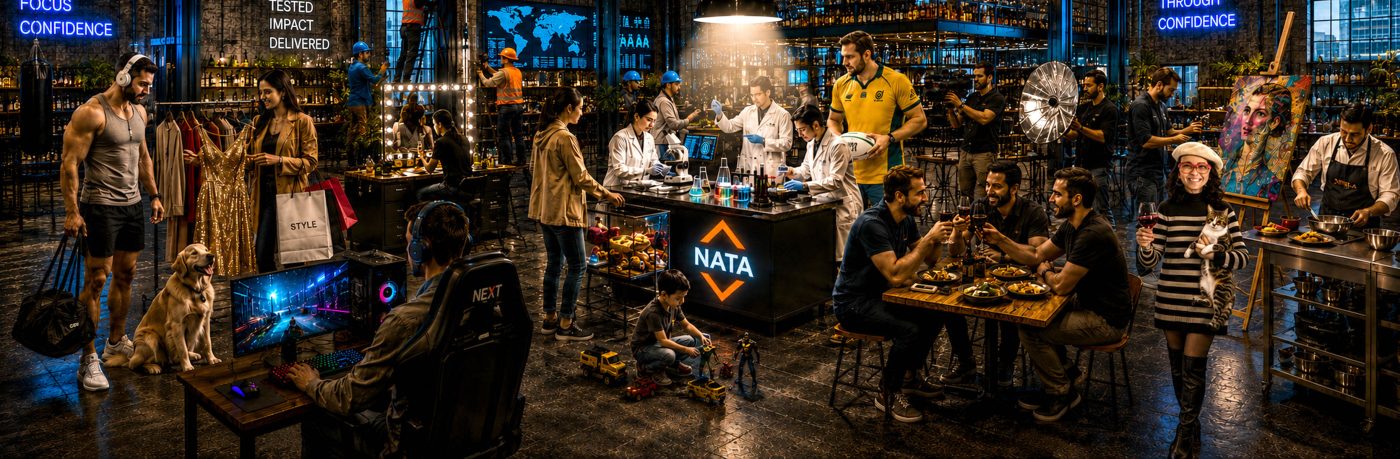
Around the world, accreditation intersects with industries that are far removed from the stereotypes most people imagine. It exists in the ecosystems surrounding food, wine, cosmetics, technology, advanced manufacturing, consumer products and digital services. It sits quietly alongside innovation, helping to create confidence in products and services before they ever reach consumers. The irony is that many of the things we enjoy most are built upon foundations that few of us ever stop to consider.
Think about a typical day. A person may begin the morning with coffee, spend the day working from a laptop, listen to music through wireless earbuds, purchase lunch, check information on a food label, exercise in performance clothing and finish the evening with a meal and a glass of wine. None of these moments feel connected to accreditation. They feel personal, familiar and entirely ordinary. Yet hidden within many of them are industries, facilities and organisations dedicated to testing, measuring, inspecting, analysing and verifying. Their work contributes to confidence in the products and services people use every day, often without anyone noticing.
That idea becomes even more compelling when viewed through the lens of creativity. Creativity is often celebrated as imagination, expression and innovation, but creativity also relies on confidence. Designers need confidence in materials. Manufacturers need confidence in processes. Consumers need confidence in products. Whether it is a textile, a cosmetic product, a piece of technology or a food item, innovation rarely exists in isolation. Behind it sits a network of expertise helping ensure that what is promised can be delivered.
Closer to home, many Australians encounter the outcomes of this work every day through organisations accredited by NATA. Food testing, wine analysis, agricultural testing, water quality monitoring, pathology services, environmental testing and product safety assessments all contribute to industries and services that Australians rely upon. While most people will never visit a NATA-accredited facility, they will almost certainly experience the results of their work. The connection may not always be obvious, but it is there nonetheless.
Perhaps that is accreditation’s greatest paradox. The more effectively it does its job, the less visible it becomes. We notice the wine, not the analysis. The food, not the testing. The technology, not the assessment. The experience, not the verification. Accreditation quietly retreats into the background while the things it helps support take centre stage.
Maybe that is why accreditation has been misunderstood for so long. We have spent decades looking at the framework rather than the possibilities it helps create. Yet once you start looking beyond the laboratory door, accreditation begins to appear in a very different light. Not as an isolated technical activity, but as a contributor to many of the products, experiences and innovations that shape modern life.
So, who says accreditation is boring?
The better question might be: how many of the things we enjoy every day would be possible without it?
On World Accreditation Day –
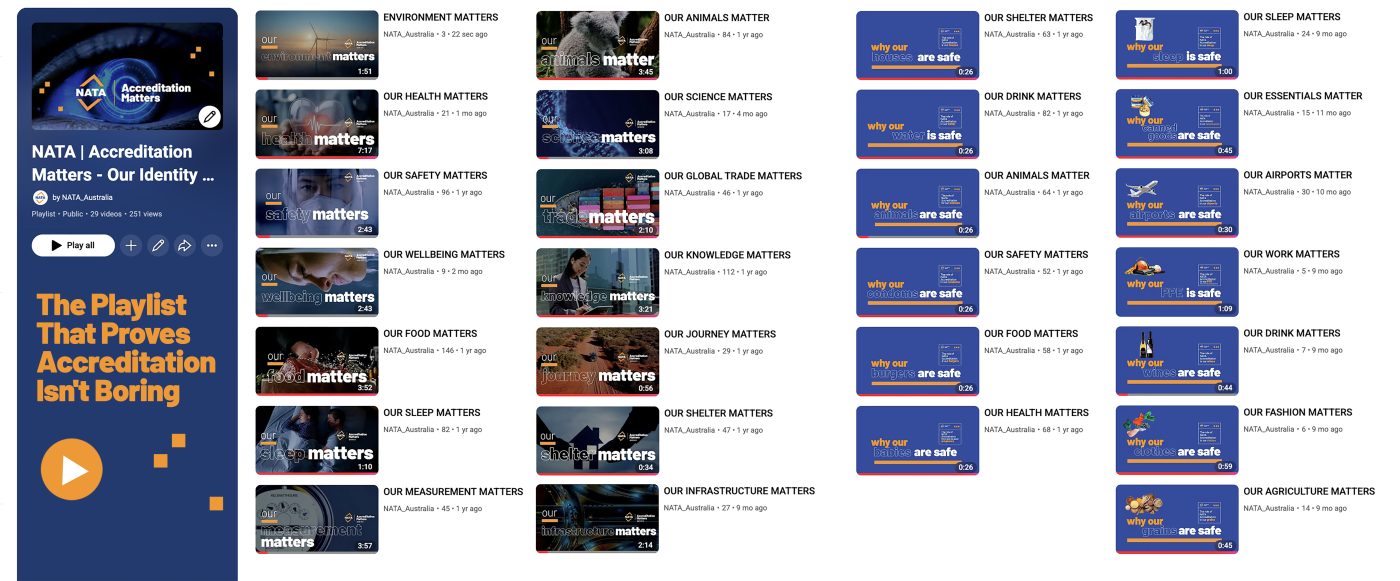
Relive the NATA Identity Campaign story: Who We Are. What We Do. Why It Matters.
Explore a collection of videos that bring accreditation to life. From animated explainers and advocacy campaigns to industry leaders sharing their expertise, this playlist reveals the role accreditation plays in building confidence, driving innovation, protecting communities, and supporting Australia’s future. Discover the people, stories and impact behind NATA—and the trusted system that helps make everyday life safer, stronger and more reliable.